

Due out on October 14, Relational Intelligence: For Conscious Therapeutic Engagement in the Service of Trauma Healing, by Dr. François Le Doze (Éditions Quantum Way), offers a new way of understanding and supporting deep traumatic wounds and traumatic dissociation.

We are often used to thinking of ourselves as all of a piece: a coherent, stable “self,” able to feel, decide, and act with a single voice. Yet the experience of trauma tells a different story. Some people say they no longer recognize themselves in their own reactions. They suddenly feel overwhelmed by fear, cut off from their emotions, frozen, absent, angry without understanding why, or unable to connect with others even when they long to.
In these moments, we are not dealing simply with an ordinary inner conflict. Something in the experience of self becomes disorganized. One part of the person remains oriented toward the present, while another seems to act as if the danger were still there. It is this reality that the Relational Intelligence® model approaches through the lens of traumatic dissociation.
Dissociation as a protective organization
In RI, dissociation is not primarily understood as a dramatic or rare pathology. It is seen as a protective organization of the psychophysical system when insecurity has been too intense, too early, or too prolonged to be integrated. When a person can neither flee, nor defend themselves, nor find sufficient safety with another, experience fragments. Certain sensations, emotions, impulses, or relational memories split off from ordinary conscious experience.
This separation makes survival possible. It protects against overwhelming activation, terror, shame, helplessness, or collapse. But what offered protection at one point can remain active in the present. The person no longer reacts only to the current situation: they also react from old organizations, shaped in a context where the danger was real or impossible to process.
This is why RI does not regard traumatic symptoms as mere dysfunctions. Hypervigilance, avoidance, freezing, collapse, breaks in presence, disproportionate reactions, and relational difficulties are understood as traces of a defensive organization that is still seeking safety.
Traumatic dissociation: beyond the language of “parts”
The Internal Family Systems model had a significant influence on François Le Doze. It made accessible the idea that psychic life is not always homogeneous, and that different inner movements can coexist within us. The language of “parts” can sometimes help represent this inner plurality and make it possible to relate to wounded or protective aspects of oneself.
Relational Intelligence®, however, shifts this perspective. It does not start from the assumption that the psyche is made up of parts already available for dialogue. It starts from the clinical observation of traumatic dissociation. From this standpoint, what we call a “part” is not always the starting point of the work. It is often a secondary, sometimes late-emerging form through which a dissociative organization becomes accessible.
At the start of therapy, traumatic dissociation most often shows up differently: through states of the autonomic nervous system, breaks in contact, movements of withdrawal, freezing, attack, or collapse, automatic relational reactions, attachment disturbances, or an inability to take in safety. The person does not necessarily encounter an identifiable “part.” They experience a state, a disconnection, a defense, or an inner world organized around danger.
The central role of attachment
For RI, traumatic dissociation is closely tied to the question of attachment. When the figure meant to provide safety is absent, unpredictable, insufficiently available, or is itself a source of fear, the nervous system is caught in a deep contradiction: it needs the bond to survive, yet that bond may also be associated with danger.
This contradiction gives rise to lasting internal organizations. The body may learn to distrust closeness, to cut itself off from need, to attack, flee, freeze, or collapse. The relationship, which should be a place of safety, then becomes an ambivalent place, sought and feared at one and the same time.
This is why therapeutic work cannot always begin with an inner dialogue with parts. Before a dissociative organization can be recognized, differentiated, and possibly met as a part, relational safety often needs to be sufficiently restored. Within the therapeutic relationship, the patient must be able to experience that another person can be present without intruding, accompany without controlling, and engage without frightening.
The relationship as a condition for integration

In Relational Intelligence®, the therapeutic relationship thus becomes a central lever of the work. It is not merely a caring framework surrounding the therapeutic process. It contributes directly to regulating the nervous system and restoring safety.
Through Conscious Therapeutic Engagement, the therapist attunes their presence, pace, words, and attention to what the patient can genuinely take in. The aim is not to push the person to relive the trauma, nor to ask them too early to identify parts or dialogue with them. The first step is to meet the current manifestations of insecurity: withdrawal, fear, tension, freezing, an inability to feel, an attack response, or a relational shutdown.
When this safety becomes sufficient, what was simply endured can begin to differentiate. The patient may notice that “something in them” is reacting, protecting, shutting off, or defending. This movement of differentiation matters: it allows the person to no longer be entirely merged with the traumatic state. They can begin to observe it, understand it, and gradually enter into a relationship with it.
When parts become accessible
It is often only at a later stage that certain dissociative organizations can emerge as more identifiable parts: a part that protects itself, a part that attacks, a part that hides, a part that carries shame or fear. In RI, however, this emergence is not assumed from the outset. It depends on the level of safety, the quality of the therapeutic relationship, and the degree of integration already regained.
Working with parts is therefore not excluded from Relational Intelligence®: it even has its place there. But it is not its initial core. The heart of the model is the treatment of traumatic dissociation through its bodily, relational, and neurobiological manifestations. Parts are only one of the possible forms this dissociation can take once it becomes differentiated enough to be met.
This distinction is essential. It prevents RI from being reduced to a variant of IFS. RI acknowledges the contribution of the language of parts, but places it within a broader understanding: that of defensive responses, attachment disturbances, the autonomic nervous system, and regulation through relationship.
What this changes for the patient
For the patient, this shift in perspective lifts a great deal of guilt. The question is no longer “Why am I like this?” or “Why does this part of me sabotage my life?” It becomes possible to understand that certain reactions are traces of an old protective organization, put in place when safety was lacking.
Withdrawal may have been a way of surviving. An attack may have protected against helplessness. Collapse may have been the only possible response to an inescapable situation. Emotional numbing may have made it possible to go on living despite the unbearable.
The therapeutic question then changes. It is not primarily about making these reactions disappear, but about understanding what they are still trying to protect, and allowing the nervous system to discover that other responses are now possible in the present. The goal of RI is not to eliminate inner plurality, nor to force the person into an artificial unity. It is to restore a living continuity in the experience of self: being able to feel without being overwhelmed, to connect without losing oneself, to protect oneself without remaining a prisoner of the past, and to regain freedom where one’s history had imposed automatic responses.
This is one of the guiding threads ofRelational Intelligence: For Conscious Therapeutic Engagement in the Service of Trauma Healing. In it, François Le Doze shows that transforming deep traumatic wounds does not come about solely through self-understanding or inner dialogue, but through a new experience of safety in which body, relationship, and awareness can gradually reorganize.
Frequently asked questions
What is traumatic dissociation?
In Relational Intelligence®, traumatic dissociation is not understood as a rare or dramatic pathology. It is seen as a protective organization of the psychophysical system when insecurity has been too intense, too early, or too prolonged to be integrated. Certain sensations, emotions, impulses, or relational memories then split off from ordinary conscious experience.
How does dissociation show up at the start of therapy?
Most often through states of the autonomic nervous system: breaks in contact, movements of withdrawal, freezing, attack, or collapse, automatic relational reactions, attachment disturbances, or an inability to take in safety. The person does not necessarily encounter an identifiable “part,” but experiences a state, a disconnection, or a defense.
Is Relational Intelligence® a variant of IFS?
No. RI acknowledges the contribution of the language of parts but places it within a broader understanding: that of defensive responses, attachment disturbances, the autonomic nervous system, and regulation through relationship. Working with parts has its place, but it is not the model’s initial core.
Why does attachment play a central role in dissociation?
When the figure meant to provide safety is absent, unpredictable, insufficiently available, or is itself a source of fear, the nervous system is caught in a deep contradiction: it needs the bond to survive, yet that bond may also be associated with danger. The relationship then becomes an ambivalent place, sought and feared at one and the same time.
Also in this series
Going further
Does this resonate with you?
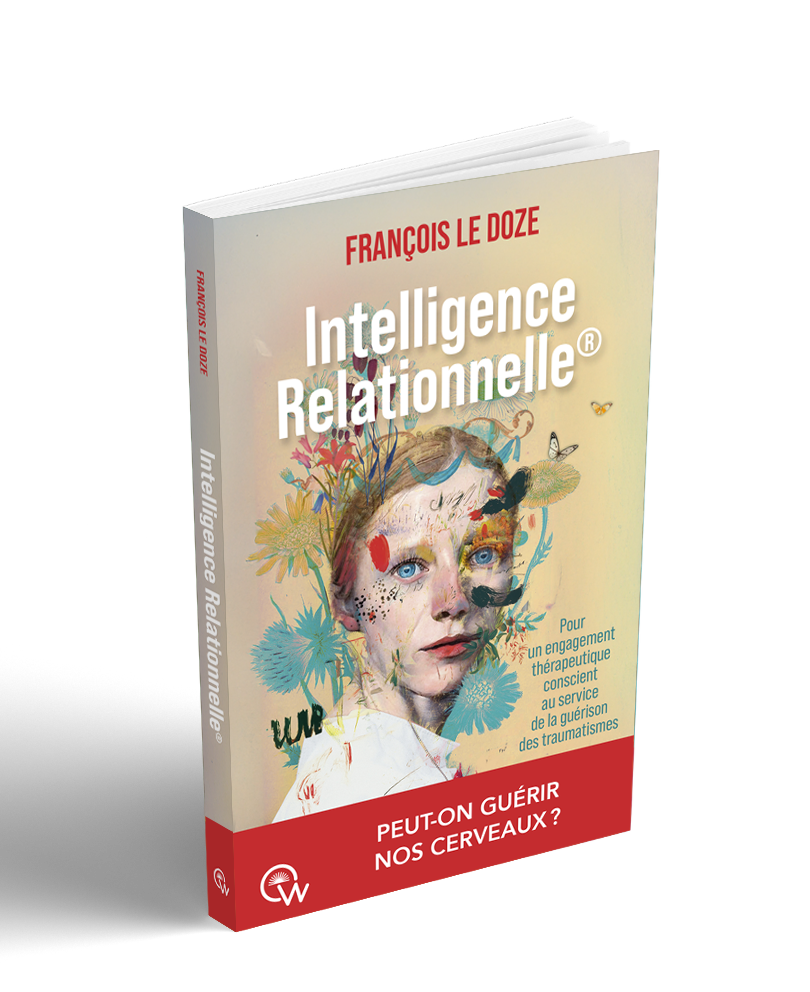
The book Relational Intelligence: For Conscious Therapeutic Engagement in the Service of Trauma Healing (released October 14) presents the model in detail.
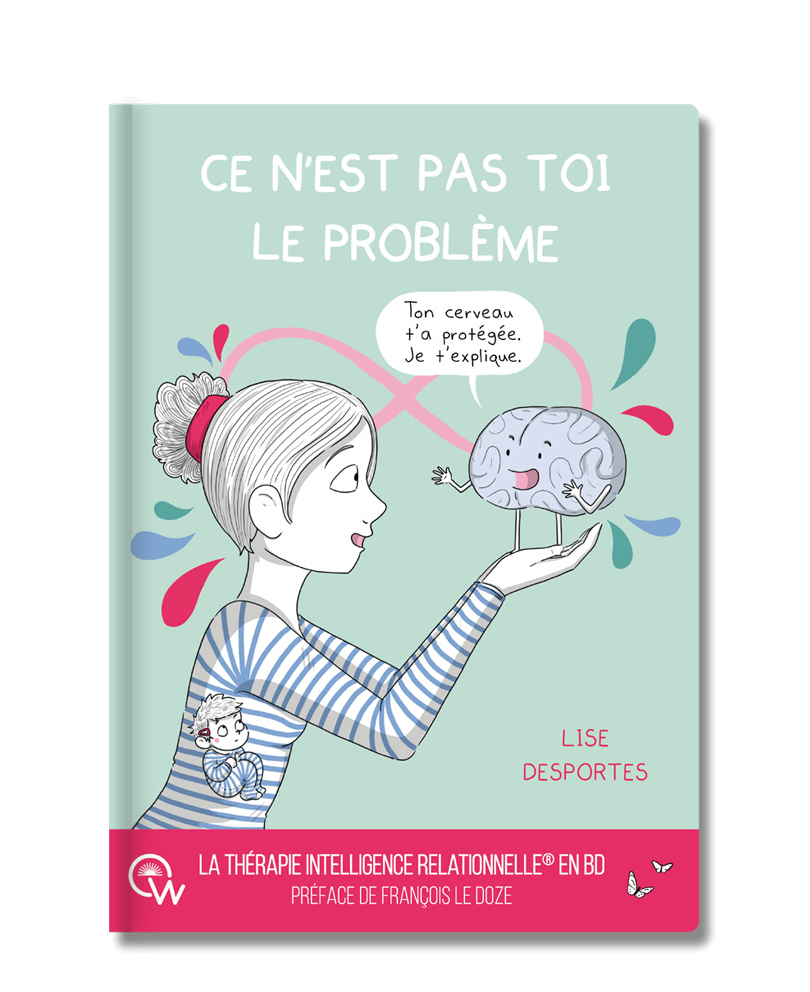
Looking for a simple resource to introduce these ideas to your patients?
It’s Not You That’s the Problem, the graphic novel by Lise Desportes with a foreword by François Le Doze (released August 26), makes these concepts accessible.
Are you a practitioner who would like to train in Relational Intelligence®?
 Français
 English