

Relational Intelligence: For Conscious Therapeutic Engagement in the Service of Trauma Healing, by Dr. François Le Doze (Éditions Quantum Way), offers a new way of understanding and supporting deep traumatic wounds and traumatic dissociation.
Relational Intelligence® grew out of a long practice of Internal Family Systems. François Le Doze, a neurologist turned psychotherapist, first encountered IFS as a patient, then as a clinician and trainer. The model profoundly transformed the way he understood psychological life, inner multiplicity, and the role of the Self in the therapeutic process.
Yet a living clinical practice sometimes leads one to question the conditions under which a model can truly unfold its full power. Over years of working with patients marked by deep traumatic wounds, François Le Doze came to explore a specific question: what happens when access to the Self from within remains difficult, unstable, or impossible at the start of the work? How can we support people for whom the inner relationship between the Self and the parts cannot yet take hold, because relational insecurity is itself at the core of the wound?
This question does not invalidate IFS. It opens up another field of exploration: that of attachment disorders, traumatic dissociation, and the therapeutic relationship as a support for regulation. Relational Intelligence® gradually took shape from this shift in focus—not to replace the inner relationship between the Self and the parts, but to understand under what conditions the relationship with another can make that inner relationship possible.
What IFS made possible
IFS, developed by Richard Schwartz, offered a remarkably fruitful language for describing inner multiplicity. It helps us understand that our psychological life is not always homogeneous: different movements can coexist within us, sometimes in the form of protective, wounded, critical, or exiled parts. These parts are not approached as enemies to be fought, but as aspects of ourselves that have often sought to protect the person from pain, shame, fear, or helplessness.
This perspective has significant clinical implications. It makes it possible to replace judgment with curiosity. A painful reaction is no longer perceived merely as a flaw or a symptom to be eliminated; it can be understood as an attempt at protection that has sometimes become costly or maladaptive. IFS also brought the notion of the Self to the forefront: the capacity for presence, calm, curiosity, and compassion from which a person can enter into relationship with what is suffering within them.
These contributions remain important for Relational Intelligence®. RI recognizes the value of the language of parts and the central place of the Self as a regulating agent. But it places these notions within a broader understanding of traumatic dissociation, the autonomic nervous system, and relational safety.
When access to oneself is blocked

IFS work generally assumes that a person can unblend from what is overwhelming them, observe what is happening inside, and then enter into relationship with their wounded or protective parts from the Self. In many situations, this path is invaluable.
But some patients cannot yet take this path. They do not immediately encounter a clearly identifiable part. Instead, they encounter a state: a shutdown, panic, a stunned paralysis, collapse, tension, withdrawal, an attack, an inability to feel or to receive connection.
In these situations, the difficulty does not necessarily stem from resistance or a lack of willingness. It may stem from the fact that relational safety is not yet sufficiently established to allow stable access to the Self from within. The patient may wish to enter into relationship with themselves, but their nervous system remains organized around danger. They may want to connect with the therapist while perceiving closeness as threatening. They may seek help and protect themselves from it in the same movement.
This is where RI introduces an important clinical shift. Before trying to bring parts into dialogue, it may be necessary to meet the dissociative organization as it presents itself: in the body, in the relationship, in defensive responses, and in attachment disorders.
From the part to traumatic dissociation
IFS reads psychological life in terms of parts. RI acknowledges this reading but gives primary importance to traumatic dissociation. This means that parts are not always considered the starting point of the work. They may be one form through which dissociation becomes accessible, but they do not encompass the whole of the traumatic process.
In deep wounds, dissociation can manifest before any clear representation in the form of a part. It can appear as a break in presence, an absence from the body, a freeze, an attack response, relational withdrawal, overwhelming shame, collapse, or an inability to receive safety. These are the manifestations that RI seeks first to welcome, understand, and regulate.
This perspective avoids asking the patient too early for a capacity for introspection or inner dialogue that is not yet available. Instead, it invites us to identify the conditions under which the experience can gradually become differentiated. Only then can what was first experienced as a global state, a defense, or a shutdown sometimes emerge in the form of a more identifiable part.
Attachment as a gateway

Attachment disorders play a central role in this shift. They are not only about painful memories or past events. They affect the very way connection was experienced: as insufficient, unpredictable, intrusive, absent, dangerous, or ambivalent.
When the attachment figure was unable to provide sufficient safety, the child can be caught in a profound contradiction: they need the connection to survive, yet that connection can also become a source of insecurity. This contradiction can durably shape the nervous system and relational life.
Later, in therapy, this organization can be replayed. The patient may want the therapist’s help while distrusting their engagement. They may seek closeness while experiencing it as intrusive. They may hope for safety while anticipating abandonment, judgment, control, or collapse. In these moments, the work is not simply about talking about a past relationship; it is about living, within the present therapeutic relationship, an experience different enough for the nervous system to begin to reorganize.
Co-regulation as a support
One of RI’s contributions is to give co-regulation a central place in the treatment of attachment wounds. Co-regulation refers to the possibility for a dysregulated nervous system to gradually regain safety through contact with another, sufficiently regulated nervous system.
From this perspective, the therapeutic relationship is not merely the framework for the work. It becomes one of its levers. Through Conscious Therapeutic Engagement, the therapist attunes their presence, pace, speech, distance, gaze, and level of engagement to what the patient can actually receive.
It is not a matter of the therapist replacing the patient’s Self, nor of taking control of their inner process. It is a matter of helping to create the conditions in which the Self can become accessible again. When access to oneself is blocked, the relationship can become an indirect path toward this capacity for inner regulation.
The contributions of polyvagal theory, particularly in the clinical work of Deb Dana, have helped clarify the importance of autonomic states and co-regulation in care. The work of Deirdre Fay has also helped bring together trauma, attachment, the body, and relational safety. RI engages in dialogue with these contributions while integrating them into a clinical approach centered on traumatic dissociation and Conscious Therapeutic Engagement.
A lineage and a shift
Relational Intelligence® retains a major clinical insight from IFS: what suffers within us can be met in ways other than through judgment, coercion, or fighting against ourselves. But it develops this insight in a particular direction: that of attachment disorders and traumatic dissociation, where access to the Self from within can be blocked by relational insecurity itself.
In these situations, the therapeutic relationship becomes an essential passageway. It does not replace the inner relationship between the Self and the parts; it helps create the conditions for it. RI does not simply add polyvagal theory or attachment to IFS: it organizes clinical work around a guiding question—how can enough relational safety be restored for what has been dissociated to gradually differentiate, connect, and integrate? It is in this interplay between the IFS lineage, relational safety, and the treatment of traumatic dissociation that Relational Intelligence® finds its distinctive character.
What this changes for patients
For patients, this perspective can be profoundly relieving of guilt. Some people have already been through therapies that asked them to talk about wounds they could not put into words, or to enter into relationship with parts they could not feel. They may have concluded that they were resisting, failing, or incapable of doing the therapeutic work expected of them.
RI offers a different understanding. If the patient cannot access a part or their Self from within, this may mean that their nervous system has not yet regained the necessary conditions of safety. Care then begins not with a demand for introspection, but with a sufficiently attuned relational experience. Within this relationship, what was frozen, cut off, or defensive can gradually become differentiated. The person can begin to recognize what is happening inside them, to understand it, and sometimes to meet it in the form of more identifiable parts. Inner work then becomes possible not because it has been imposed, but because the conditions of safety have been restored.
The move from IFS to RI should therefore be understood not as an opposition between two models, but as a shift in clinical perspective. IFS made it possible to recognize inner multiplicity and the regulating power of the Self; RI extends this insight by asking what happens when such self-to-self regulation is not yet accessible. The answer it proposes is relational, embodied, and neurobiological: when the wound has been organized in the insecurity of connection, the therapeutic relationship can become the place where a different experience of safety begins to take shape.
Relational Intelligence: For Conscious Therapeutic Engagement in the Service of Trauma Healing traces this trajectory: not as an abandonment of IFS, but as the story of a clinical shift born of the encounter with attachment disorders, traumatic dissociation, and the need for consciously regulated therapeutic engagement.
Frequently asked questions
Is Relational Intelligence® opposed to IFS?
No. The move from IFS to RI should be understood not as an opposition between two models, but as a shift in clinical perspective. IFS made it possible to recognize inner multiplicity and the regulating power of the Self; RI extends this insight by asking what happens when such self-to-self regulation is not yet accessible.
Why are some patients unable to work with their parts?
Some patients do not immediately encounter a clearly identifiable part, but rather a state: a shutdown, panic, a stunned paralysis, collapse, tension, withdrawal, or an inability to receive connection. The difficulty does not stem from resistance: relational safety is not yet sufficiently established to allow stable access to the Self.
What is co-regulation in psychotherapy?
Co-regulation refers to the possibility for a dysregulated nervous system to gradually regain safety through contact with another, sufficiently regulated nervous system. The therapist does not replace the patient’s Self: they help create the conditions in which that Self can become accessible again.
What does RI specifically add to IFS?
RI does not simply add polyvagal theory or attachment to IFS: it organizes clinical work around a guiding question—how can enough relational safety be restored for what has been dissociated to gradually differentiate, connect, and integrate? Its distinctive character lies in this interplay between the IFS lineage, relational safety, and the treatment of traumatic dissociation.
Also in this series
Going further
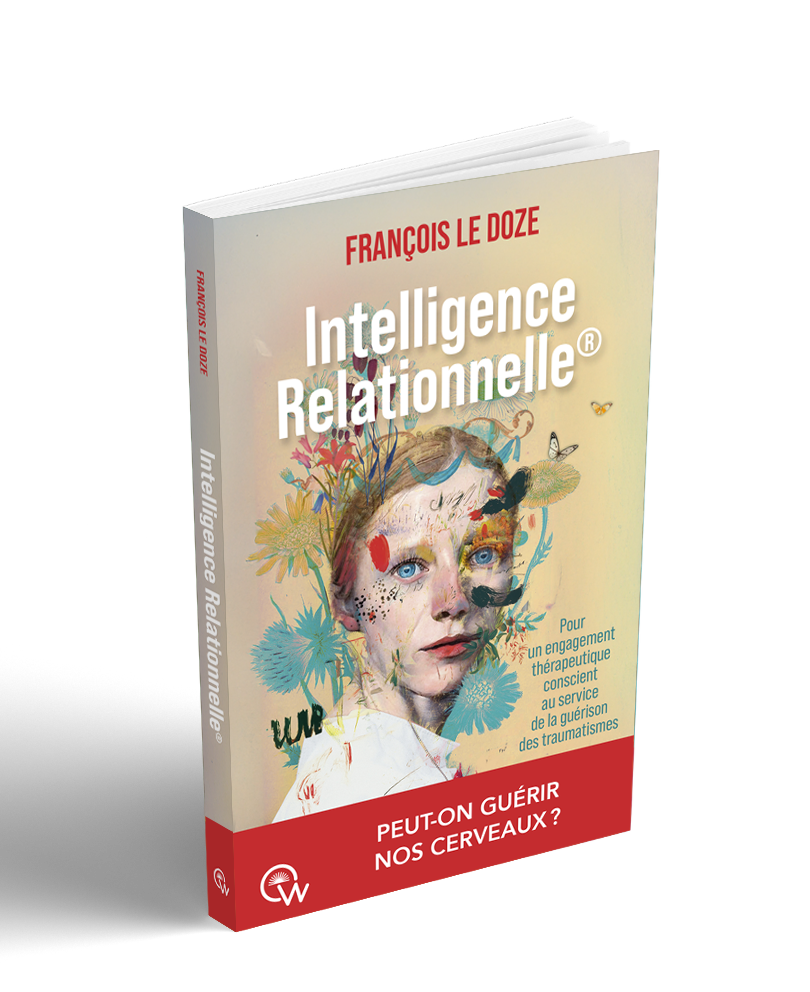
Does this resonate with you?
The book Relational Intelligence: For Conscious Therapeutic Engagement in the Service of Trauma Healing, by Dr. François Le Doze, presents the model in detail.
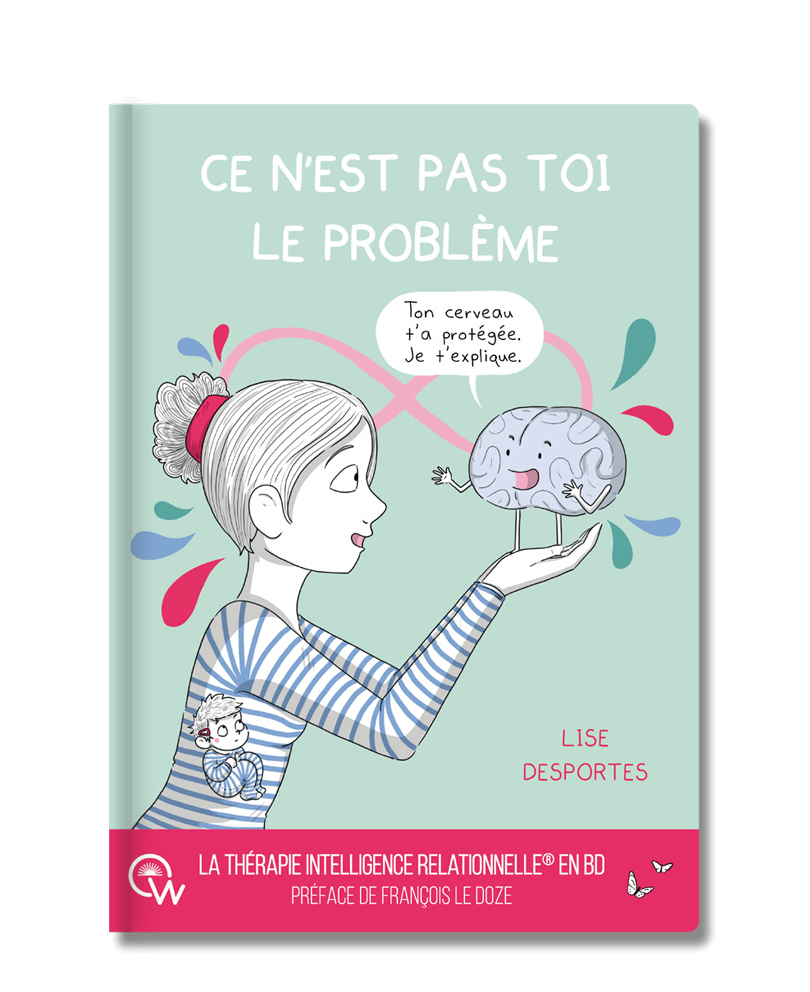
Looking for a simple resource to introduce these ideas to your patients?
It’s Not You That’s the Problem, the graphic novel by Lise Desportes with a foreword by François Le Doze (released August 26), makes these concepts accessible.
Are you a practitioner who would like to train in Relational Intelligence®?
References
Dana, D. (2018). The Polyvagal Theory in Therapy: Engaging the Rhythm of Regulation. W. W. Norton.
Fay, D. (2017). Attachment-Based Yoga & Meditation for Trauma Recovery: Simple, Safe, and Effective Practices for Therapy. W. W. Norton.
Fay, D. (2021). Becoming Safely Embodied: A Guide to Organize Your Mind, Body and Heart to Feel Secure in the World. Morgan James Publishing.
Schwartz, R. C., & Sweezy, M. (2019). Internal Family Systems Therapy (2nd ed.). Guilford Press.
Van der Hart, O., Nijenhuis, E. R. S., & Steele, K. (2006). The Haunted Self: Structural Dissociation and the Treatment of Chronic Traumatization. W. W. Norton.
 Français
 English