

Relational Intelligence: For Conscious Therapeutic Engagement in the Service of Trauma Healing, by Dr. François Le Doze (Éditions Quantum Way), offers a new way of understanding and supporting deep traumatic wounds and traumatic dissociation.

The Relational Intelligence® model brings together two core modalities of therapeutic work: co-regulation and self-regulation. Co-regulation works through the therapist’s engagement and the relational safety they help to establish. Self-regulation refers to the process by which the patient, from their own Self, can enter into relationship with parts or dissociative organizations that remain stuck in the past, so that they can unburden and return to the present.
These two modalities are not in opposition. They correspond to two different clinical conditions. When there is sufficient safety with the therapist, the patient can access self-regulation: their Self can become the primary regulating agent of the inner work. When that safety is not yet sufficient, co-regulation comes first: the therapist engages their presence, attunement, and metacognition to establish the relational conditions that will later make self-regulation possible.
Defining self-regulation
In RI, self-regulation does not simply mean the ability to calm oneself down alone. It refers to a more specific therapeutic process: from their Self, the patient can enter into relationship with what is suffering or protecting within them. They can then accompany parts or dissociative organizations that remain fixed in the past, allow them to unburden what they carry, and help them return to the present.
This definition stands in the lineage of Internal Family Systems, in which the patient’s Self becomes the central agent of transformation. When the Self is accessible, the therapist supports the patient in their inner relationship with their parts. The patient does more than observe an emotion or a defense. They can establish a regulating relationship with whatever within them is still caught up in an old threat.
This distinction matters. A patient can be highly activated and still have access to self-regulation. Emotional intensity, fear, anger, or shame are not enough to determine the therapeutic path. The decisive criterion is whether the patient can remain safe with the therapist while entering into relationship with what is being activated within them.
Defining co-regulation

Co-regulation comes into play when safety with the therapist is not yet sufficient to allow this inner work from the patient’s Self. In that case, the therapeutic relationship itself activates protective responses. The patient may perceive the therapist’s engagement as dangerous, even when it is well attuned. Closeness, attention, presence, or therapeutic availability can reactivate attachment organizations built around insecurity.
Co-regulation, then, is not simply about soothing activation. Its aim is to establish enough relational safety for the patient eventually to access self-regulation. It can take a bodily form: attuning pace, voice, distance, posture, and embodied presence. It can also take a metacognitive form: together with the patient, the therapist makes explicit how the therapeutic relationship activates their protective responses.
In both cases, the therapist does not stand in for the patient’s Self. They create the conditions in which that Self can once again become accessible from within.
Safety with the therapist as the clinical criterion
The distinction between co-regulation and self-regulation does not depend primarily on the patient’s level of activation. It depends on the quality of safety available with the therapist.
When the patient feels safe enough with the therapist, they can explore their inner experience without the therapeutic relationship becoming the main target of their defenses. They can then engage in an inner relationship with a part or a dissociative organization. Self-regulation becomes possible.
When the therapeutic relationship mainly activates protective responses, the work cannot be organized first around the Self’s relationship with the parts. The patient may be preoccupied by fear of the therapist’s engagement, by an expectation of intrusion, abandonment, judgment, control, or collapse. The work must then focus first on relational safety itself. This is the domain of co-regulation.
RI therefore does not assign interventions according to a simple contrast between a calm patient and an activated one. It is guided by a more precise clinical question: can the patient feel safe enough with the therapist for their own Self to engage in the inner work?
Co-regulation and polyvagal theory: two pathways to the ANS
Co-regulation always works through the autonomic nervous system: that is what it regulates. What varies is the pathway by which the therapist reaches it. The first pathway is direct and embodied. The therapist attunes their presence so that the patient can receive cues of safety. They may slow down, change their tone of voice, adjust the distance, support orienting, reduce the intensity of their engagement, or steady the rhythm of the exchange.
The second pathway reaches the autonomic nervous system through the mediation of metacognition. The therapist does not regulate only by directly attuning their presence: together with the patient, they make explicit the relational dynamic that is activating the patient’s protective responses. They may name a mistrust, an expectation of intrusion, a difficulty receiving their engagement, an anticipation of abandonment, or a defense against closeness.
Putting this into words also acts on the autonomic nervous system, but indirectly. The patient can recognize how the therapeutic relationship activates their protective system, which allows their autonomic state to regulate without the therapist’s direct engagement itself being experienced as dangerous. The two pathways are not in opposition: they reach the same target—the state of the autonomic nervous system—by different routes.
When self-regulation becomes possible
When relational safety becomes sufficient, what was experienced as dangerous can become safe. The patient can then more readily engage in an inner relationship with their parts or dissociative organizations. What was stuck in the past can be met from the Self, unburden, and then return to the present.
Self-regulation therefore does not begin with an instruction telling the patient to manage on their own. It begins when the relational conditions allow the patient’s Self to become the regulating agent of the inner work.
In this mode, the therapist accompanies without taking the lead in regulation. They support access to the Self, check that the patient remains safe with them, and accompany the inner relationship that develops between the Self and what is suffering or protecting. The work can then come closer to IFS, while remaining grounded in the RI understanding of traumatic dissociation.
Attachment disorders and access to the Self
In attachment disorders, access to the Self from within can be blocked by relational insecurity. The patient may want to work on themselves, but the therapeutic relationship reactivates protective responses that prevent a stable inner relationship from taking hold.
The problem does not necessarily lie in the intensity of affect. It lies in the fact that safety with the therapist has not yet been established. As long as therapeutic engagement is perceived as dangerous, the patient can hardly use their own Self as the primary regulating agent. Co-regulation then makes it possible to work on the missing condition: relational safety.
As this safety develops, the patient can gradually engage their own Self in relationship with their parts or dissociative organizations. Co-regulation then prepares the way for self-regulation—not as an abstract stage, but as an observable clinical transformation: the patient can explore their inner world without the therapeutic relationship primarily activating their defenses.
Traumatic dissociation: structural and non-structural forms
This framework sheds light on the difference between more and less structural forms of dissociation. When dissociation is closely tied to attachment disorders, the patient does not always encounter, from the outset, differentiated parts they could work with from their Self. Instead, they may be caught in automatic relational responses: withdrawal, mistrust, attack, collapse, shutdown, an inability to receive safety.
In these situations, co-regulation often plays a major role. The therapist works to establish the relational safety needed for the experience to become differentiated and accessible to self-regulation.
When dissociation takes a less structural form, the patient can recognize parts more easily. They can then access work from their Self more directly. Self-regulation can take a larger place, because the therapeutic relationship is not the main target of their defenses.
This distinction remains a clinical one. It does not sort patients into fixed categories. It helps the therapist determine whether the work can be organized around the patient’s Self or whether it must first address relational safety with the therapist.
Alternating over the course of therapy
Co-regulation and self-regulation can alternate over the course of a single therapy, and sometimes within a single session. A patient may access self-regulation on a given issue, then need co-regulation when an attachment defense is activated. They may work with a part from their Self, then lose that possibility if the therapeutic relationship is suddenly perceived as dangerous.
The RI therapist then adjusts their intervention. They can support the inner work when the patient’s Self is available. They can return to co-regulation when relational safety becomes insufficient. They can favor the metacognitive pathway when the therapeutic relationship is activating protective responses. They can engage the bodily pathway when the state of the autonomic nervous system calls for it.
This alternation is not methodological hesitation. It reflects the clinical reality of trauma and attachment disorders: access to self-regulation depends on the relational safety available at each moment of the work.
What this changes for the patient
For the patient, this approach changes the therapeutic experience. They are not confronted too early with inner work they cannot yet undertake safely. Nor are they kept dependent on the therapist’s presence once their own Self can become the regulating agent.
When relational safety is lacking, therapy works to establish it. When that safety is sufficient, the patient can engage in an inner relationship with what is suffering or protecting. Parts or dissociative organizations stuck in the past can then unburden and return to the present.
The goal, then, is not merely for the patient to feel calmer. The goal is for them to regain access to their own Self as a regulating agent, when relational safety with the therapist allows it.
A core principle of the RI model
The combination of co-regulation and self-regulation is one of the central pillars of Relational Intelligence®. Co-regulation works to establish relational safety when it is lacking. Self-regulation becomes possible when the patient’s Self can enter into relationship with the parts or dissociative organizations stuck in the past.
This approach avoids reducing trauma treatment to a single pathway. In some situations, the work proceeds first through the therapeutic relationship. In others, it proceeds through the inner relationship between the patient’s Self and what is suffering or protecting within them. At each moment, RI seeks to determine which modality is clinically available.
Relational Intelligence — For Conscious Therapeutic Engagement in the Service of Trauma Healing develops this perspective: a psychotherapy in which the therapist’s engagement establishes the conditions of safety the patient needs in order to access, when it becomes possible, their own capacity for self-regulation.
Frequently asked questions
What is self-regulation in Relational Intelligence®?
It does not simply mean the ability to calm oneself down alone, but a specific therapeutic process: from their Self, the patient can enter into relationship with what is suffering or protecting within them. They can then accompany parts or dissociative organizations that remain fixed in the past, allow them to unburden, and help them return to the present.
How does the therapist know whether to co-regulate or to support self-regulation?
The criterion is not the patient’s level of activation but the quality of safety available with the therapist. A patient can be highly activated and still have access to self-regulation. The clinical question is: can the patient feel safe enough with the therapist for their own Self to engage in the inner work?
Does co-regulation always go through the body?
Co-regulation always works through the autonomic nervous system: that is what it regulates. What varies is the pathway taken. The first is direct and embodied: pace, voice, distance, orienting. The second works through the mediation of metacognition. Both reach the same target by different routes.
Can co-regulation and self-regulation alternate?
Yes, over the course of a single therapy and sometimes within a single session. A patient may work with a part from their Self, then lose that possibility if the therapeutic relationship is suddenly perceived as dangerous. This alternation is not methodological hesitation: it reflects the clinical reality of trauma and attachment disorders.
Also in this series
Going further

Does this resonate with you?
The book Relational Intelligence: For Conscious Therapeutic Engagement in the Service of Trauma Healing, by Dr. François Le Doze, presents the model in detail.
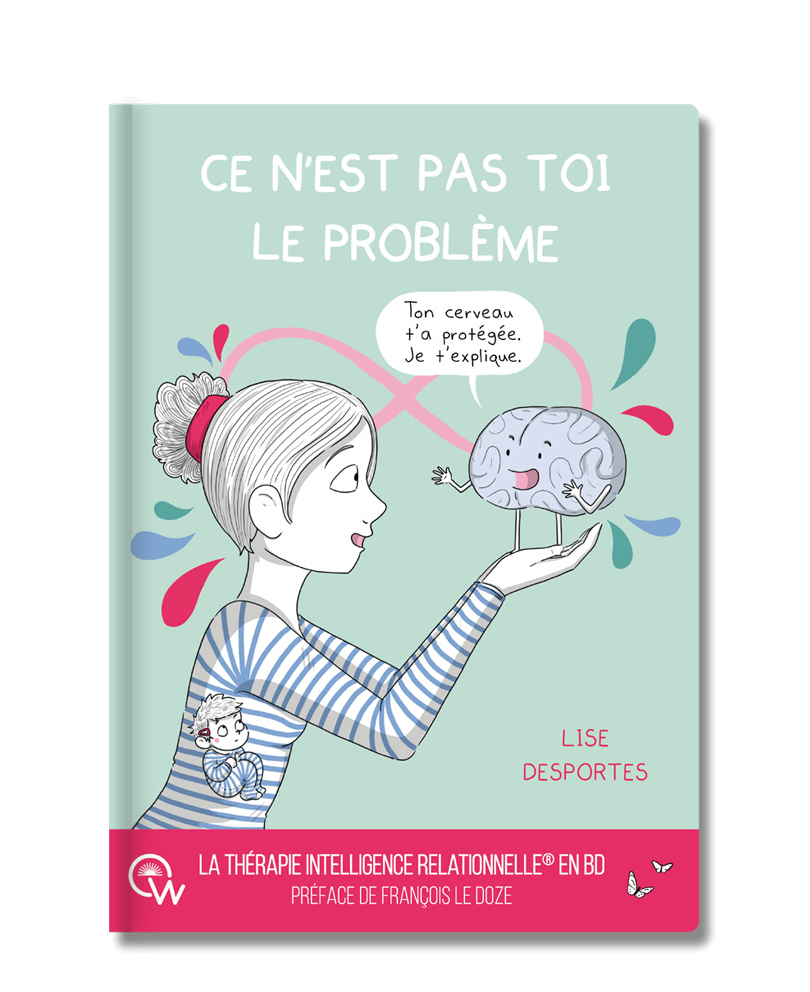
Looking for a simple resource to introduce these ideas to your patients?
It’s Not You That’s the Problem, the graphic novel by Lise Desportes with a foreword by François Le Doze (released August 26), makes these concepts accessible.
Are you a practitioner who would like to train in Relational Intelligence®?
References
Dana, D. (2018). The Polyvagal Theory in Therapy: Engaging the Rhythm of Regulation. W. W. Norton.
Fay, D. (2021). Becoming Safely Embodied: A Guide to Organize Your Mind, Body and Heart to Feel Secure in the World. Morgan James Publishing.
Schwartz, R. C., & Sweezy, M. (2020). Internal Family Systems Therapy (2nd ed.). Guilford Press.
 Français
 English