

Due out on October 14, Relational Intelligence: For Conscious Therapeutic Engagement in the Service of Trauma Healing, by Dr. François Le Doze (Éditions Quantum Way), offers a new way of understanding and supporting deep traumatic wounds and traumatic dissociation.
In many contemporary approaches to trauma, one clinical question keeps coming back: what allows a wounded person to regain presence to themselves when their inner experience is flooded by fear, shame, anger, collapse, or dissociation? From what place can they observe what is happening inside them without being entirely merged with what overwhelms them?
The Internal Family Systems model, developed by Richard Schwartz, offered an answer that has become famous: the Self. In this perspective, the Self refers to a quality of inner presence that makes it possible to relate to wounded or protective parts without being completely identified with them. Calm, clarity, curiosity, compassion, courage, confidence, creativity, and connectedness are its most frequently described manifestations.
Relational Intelligence® takes up this notion, but shifts it. For François Le Doze, the Self is not only an inner resource the patient can draw on. It is the central regulating agent of psychic life. Yet in deep traumatic wounds, and even more so in attachment disorders, the patient cannot always access this regulating agent on their own, in a relationship from self to self.
The Self in IFS: a presence, not one more part
The Self is not an additional part. It does not add itself to the defenses, the wounds, the fear reactions, or the dissociative organizations. It belongs to another order: that of presence, awareness, and the capacity to relate to what is happening within oneself.
In IFS, the Self emerges when the protective parts agree to step back a little. The person then stops being completely identified with their anger, fear, or shame. They can observe these parts, listen to them, talk to them, and understand what they are trying to protect. This unblending is decisive: it opens a space between the person and what is overwhelming them.
RI retains this insight. It understands the Self as a regulating function: what allows psychic experience not to remain merged with its defensive states, its traumatic emotions, or its dissociative organizations.
The bottom-up Self and the top-down Self

Here the book introduces an important distinction: between the bottom-up Self and the top-down Self. The bottom-up Self refers to the state of being oneself: an embodied, bodily presence, lived in the nervous system even before it is thought about. The top-down Self refers to the capacity to become aware of it: to observe this presence, recognize it, name it, and make it a conscious experience.
This distinction helps explain why some people can have a cognitive representation of themselves without truly feeling present to themselves. They may understand what is happening to them, sometimes with great lucidity, without being able to feel in their body a sense of safety, continuity, or presence.
In trauma, this dissociation is common. A person may know rationally that they are not in danger while feeling that the danger is there. They may want to connect while shutting down. They may wish to calm down while remaining trapped in a state of alarm or collapse. The top-down Self is then not enough. Experience has to be met at a deeper level: that of the body, the nervous system, and relational safety.
Avoiding a spiritualized view of the Self
The notion of the Self can easily be understood in spiritualized terms: an intact core, a deep essence, a luminous part of the person that has remained preserved despite the wounds. This way of speaking can carry poetic or existential force. But RI proposes to use it first and foremost clinically.
In this framework, the Self is not presented as a spiritual entity to be discovered, nor as an unharmed soul hidden behind the symptoms. It is understood as a capacity for presence, regulation, and relationship. This capacity may be more or less accessible depending on the state of the nervous system, the degree of dissociation, the attachment history, and the level of safety available in the therapeutic relationship.
This caution matters. It keeps us from idealizing the Self and from asking the patient too early to access a resource that, in deep traumatic disorders, may be precisely unavailable in a relationship from self to self. It is not enough to tell someone, “come back to your Self.” Their nervous system still has to be able to experience it.
When the Self is not accessible from self to self

This is where RI clearly differs from a classic application of IFS. In many situations, particularly when attachment disorders are in the foreground, the patient cannot directly access their Self in an internal relationship from self to self. The difficulty does not stem from a lack of will or from psychological resistance. It stems from the fact that relational safety has not yet been sufficiently restored.
In attachment wounds, the bond itself may have become ambivalent, threatening, or inaccessible. The patient may long for the relationship and protect themselves from it in the same movement. They may seek the therapist’s help while perceiving the therapist’s engagement as dangerous. They may need closeness while shutting down as soon as it becomes possible.
Under these conditions, the work cannot rest on self-regulation alone. Asking the patient to connect from their Self with what is suffering within them is likely to fall short, or even prove impossible. Before they can regulate from self to self, they often need to be met in a relationship that does not confirm the old danger.
The Self through the therapist

One of the central contributions of Relational Intelligence® is thus to hold that the Self remains essential, but that it may first be encountered through the therapist. Not because the therapist possesses the patient’s Self, nor because they take its place, but because their own state of presence, regulation, and engagement can serve as temporary support for the patient’s nervous system.
In attachment disorders, the therapist thus becomes a mediator of regulation. Through Conscious Therapeutic Engagement, they offer a presence that is stable, engaged, and non-intrusive enough for the patient to gradually experience a safety they cannot yet generate on their own. The patient’s Self is not absent; it is inaccessible in a relationship from self to self. It needs to be supported, awakened, or reached through a new relational experience.
This is why, in RI, the therapeutic relationship is not simply a frame around the inner work. It is part of the regulation process itself. Through co-regulation, the therapist helps the patient rediscover the conditions that will later make self-regulation possible.
Self-regulation and co-regulation
When the Self is accessible from self to self, the patient can relate to what is happening within them: a fear, an anger, a shame, a defense, a dissociative organization or, in some cases, a more differentiated part. They can observe, listen, understand, and begin to regulate their experience from the inside. This is the domain of self-regulation.
But when the Self is not accessible from self to self, the work must first go through co-regulation. The patient’s nervous system needs the support of another, sufficiently regulated nervous system. Safety does not come first from an inner operation, but from a relational experience: someone is there, engaged without intruding, present without controlling, steady without being distant.
RI therefore brings together two pathways. The first runs through the patient’s accessible Self. The second runs through the therapeutic relationship when that access is blocked. In attachment trauma, the second pathway often comes first: a great deal of co-regulation is sometimes needed before self-regulation becomes truly possible.
What this changes in therapy
This perspective profoundly changes the way therapeutic work is understood. The therapist does not seek only to bring content to the surface, interpret symptoms, or help the patient dialogue with parts. They first observe the conditions for accessing regulation: Can the patient remain present? Can they feel their body? Can they receive the therapist’s engagement? Can they tolerate closeness? Can they differentiate what is happening within them without being overwhelmed?
When these conditions are not in place, the goal is not to force access to the Self. It is to gradually restore the safety that will make this access possible. Therapeutic work then begins with attuning the relationship, the pace, the distance, speech, silence, gaze, and presence.
Only when the experience becomes safe enough can the patient begin to unblend from their traumatic states. They may discover that they are not their fear, not their collapse, not their shame, not their defensive reaction. They can begin to observe these states, and then to relate to what had, until then, been governing them.
An essential regulating agent
The Self thus remains central in RI, but access to it is not always immediate. It may be accessible from self to self when the patient already has sufficient safety. Or it may need to be reached indirectly, through the quality of the therapist’s presence, when attachment wounds have made self-regulation impossible. This is one of the major shifts proposed by François Le Doze: the Self certainly remains an unaltered inner resource that is already available, but its regulating function may need the relationship in order to be reactivated. In attachment-related traumatic disorders, the path to oneself first runs through the other.
For the person who is suffering, this understanding is deeply relieving of guilt. If they cannot manage to regulate on their own, it is not because they are failing: it may be because the conditions necessary for self-regulation have not yet been restored. What is missing is not a stronger will, but sufficient safety. The aim of RI is therefore not to ask the patient to access too quickly an inner center that is presumed to be available. It is to create the conditions in which this center can gradually manifest: in the body, in awareness, in the relationship, and then in the capacity to meet what has been wounded or dissociated.
Relational Intelligence: For Conscious Therapeutic Engagement in the Service of Trauma Healing develops this perspective: the Self appears there not as an abstract or spiritualized notion, but as an essential regulating agent, sometimes accessible in a relationship from self to self, sometimes first supported by the therapeutic relationship. It is in this interplay between self-regulation and co-regulation that the RI model offers an original pathway for supporting traumatic wounds and attachment disorders.
Frequently asked questions
What is the Self in IFS?
In the Internal Family Systems model developed by Richard Schwartz, the Self refers to a quality of inner presence that makes it possible to relate to wounded or protective parts without being completely identified with them. Calm, clarity, curiosity, compassion, courage, confidence, creativity, and connectedness are its most frequently described manifestations.
What is the difference between the bottom-up Self and the top-down Self?
The bottom-up Self refers to the state of being oneself: an embodied, bodily presence, lived in the nervous system even before it is thought about. The top-down Self refers to the capacity to become aware of it: to observe this presence, recognize it, name it, and make it a conscious experience. Some people can have a cognitive representation of themselves without truly feeling present to themselves.
Why is the Self not always accessible?
In attachment disorders, the patient cannot always directly access their Self in a relationship from self to self. The difficulty does not stem from a lack of will or from psychological resistance, but from the fact that relational safety has not yet been sufficiently restored. The bond itself may have become ambivalent, threatening, or inaccessible.
How can the therapist support access to the Self?
The Self may first be encountered through the therapist. Not because the therapist possesses the patient’s Self or takes its place, but because their own state of presence, regulation, and engagement can serve as temporary support for the patient’s nervous system. Through Conscious Therapeutic Engagement, they offer a presence that is stable, engaged, and non-intrusive.
Also in this series
Going further

Does this resonate with you?
The book Relational Intelligence: For Conscious Therapeutic Engagement in the Service of Trauma Healing (released October 14) presents the model in detail.
Looking for a simple resource to introduce these ideas to your patients?
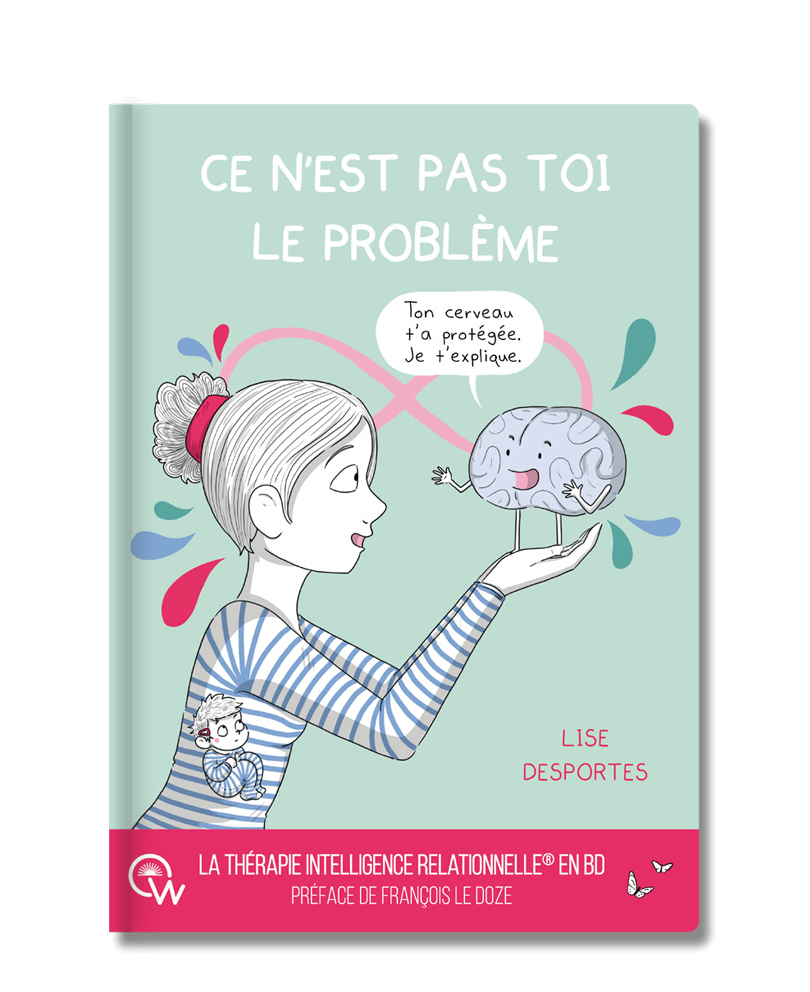
It’s Not You That’s the Problem, the graphic novel by Lise Desportes with a foreword by François Le Doze (released August 26), makes these concepts accessible.
Are you a practitioner who would like to train in Relational Intelligence®?
References
Schwartz, R. C., & Sweezy, M. (2019). Internal Family Systems Therapy (2nd ed.). Guilford Press.
Schwartz, R. C. (2021). No Bad Parts: Healing Trauma and Restoring Wholeness with the Internal Family Systems Model. Sounds True.
 Français
 English