

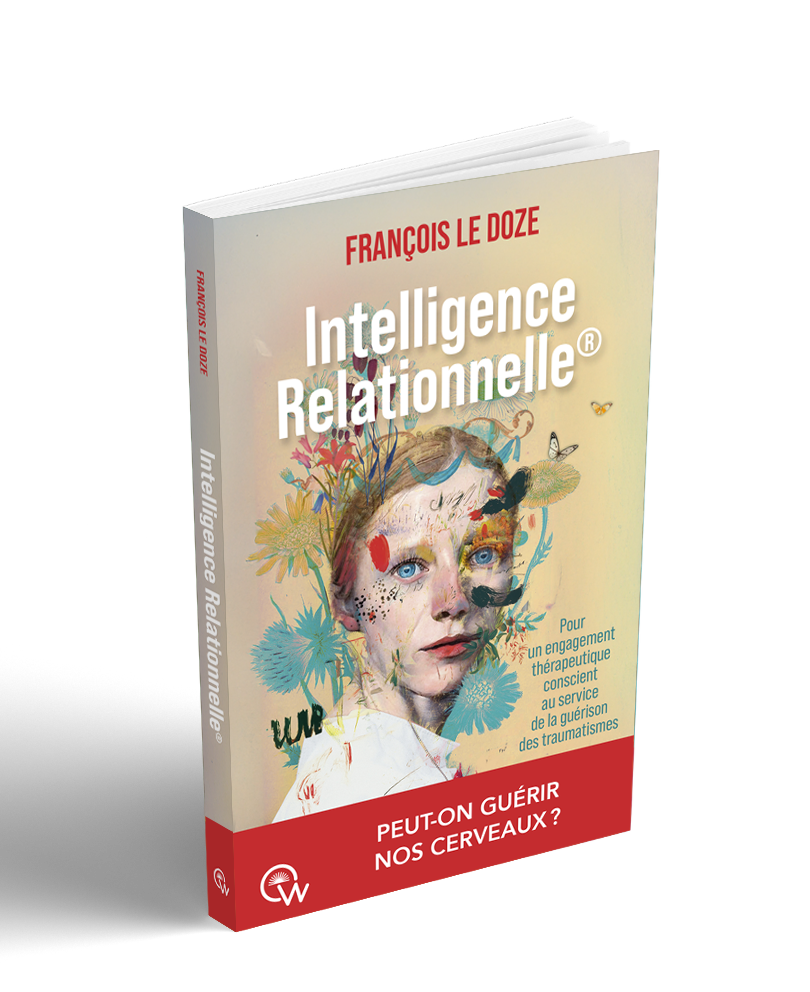
Relational Intelligence: For Conscious Therapeutic Engagement in the Service of Trauma Healing, by Dr. François Le Doze (Éditions Quantum Way), offers a new way of understanding and supporting deep traumatic wounds and traumatic dissociation.
 François Le Doze’s journey is inseparable from the birth of the Relational Intelligence® model. A neurologist for some thirty years at Caen University Hospital, he was first shaped by his work with diseases of the nervous system, physical suffering, and the sometimes complex effects of illness on patients’ subjective experience.
This first professional life gave him a deep familiarity with how the brain and nervous system work. But it also fostered a question that would run through his entire clinical evolution: how can we understand what, in a person who is ill or traumatized, involves the body, psychological life, personal history, and the relationship with others all at once?
Thirty years of neurology at Caen University Hospital
François Le Doze practiced for nearly thirty years as a neurologist at Caen University Hospital. There, he cared for patients with a wide range of neurological conditions, in which disturbances of the body, movement, sensation, pain, or perception can profoundly alter the experience of self.
This hospital practice led him to take an interest in the relationship between the body and psychological life. Neurology gave him access to the mechanisms of the nervous system; day-to-day clinical work showed him that illness can never be reduced to isolated biological functioning. It affects a person — their history, the way they inhabit their body, their relationships, and their relationship with themselves.
This dual attention — to the nervous system and to lived experience — would become one of the guiding threads of his later work. It partly explains why Relational Intelligence® places such importance on the interplay between the body, the autonomic nervous system, traumatic dissociation, attachment, and the therapeutic relationship.
Encountering Internal Family Systems
The encounter with the Internal Family Systems model, developed by Richard Schwartz, marked an important turning point in his career. François Le Doze discovered IFS first as a patient, then as a clinician. The model transformed the way he understood psychological life: no longer as a homogeneous unit, but as a system in which different parts can carry wounds, protective strategies, fears, or burdens linked to the past.
IFS also gave him a central notion: that of the Self, understood as a capacity for presence, regulation, and inner relationship with what suffers or protects. This discovery gradually steered him toward psychotherapeutic practice.
François Le Doze then became an IFS trainer and helped spread the model across French-speaking Europe. He made this approach accessible to practitioners who had until then been able to access it mainly through the English-speaking world.
This stage was decisive in his journey. Relational Intelligence® grew out of long clinical experience with IFS, of what the model makes possible, and of the questions raised by attachment disorders and traumatic dissociation.
From IFS to Relational Intelligence®
Over the course of his practice, François Le Doze observed that some patients cannot always directly access the inner, self-to-self work that IFS offers. In such situations, the patient may struggle to relate to their parts from their own Self — not for lack of willingness, but because safety with the therapist is not yet sufficiently established.
This difficulty particularly concerns attachment disorders. When insecurity has developed within early relationships, the therapeutic relationship itself can activate protective responses. The patient may need the therapist’s presence while perceiving that presence as dangerous. The work then cannot begin with self-regulation alone. It first requires the restoration of relational safety.
It was this clinical shift that gradually led François Le Doze to develop Relational Intelligence®. The model brings together the legacy of IFS with contributions from attachment theory, polyvagal theory, research on co-regulation, and the clinical understanding of traumatic dissociation.
This is not simply a combination of references. RI reorganizes these contributions around a central question: how can we help the patient emerge from traumatic dissociation when it has organized itself around relational insecurity?
This point clearly distinguishes RI from IFS. In IFS, the central question is often how to allow the Self to resume its role as inner leader of the parts. In RI, restoring embodied Self-leadership is not the starting point of the work. It emerges as a consequence of moving out of traumatic dissociation. As dissociative organizations are able to discharge and return to the present, the patient gradually recovers an embodied presence to themselves, to others, and to the world.
The role of the therapeutic relationship
In Relational Intelligence®, the therapeutic relationship is not merely the setting for the work. It is part of the therapeutic process itself. When the patient cannot yet access self-regulation, the therapist engages their presence, attunement, bodily regulation, and metacognition to establish sufficient relational safety.
This stance lies at the heart of what François Le Doze calls Conscious Therapeutic Engagement. It requires the therapist to be attentive not only to what the patient is experiencing, but also to what their own presence produces in the therapeutic relationship. The therapist adjusts their rhythm, distance, speech, silence, gaze, and way of being engaged.
The goal is not to replace the patient’s Self. It is to establish the relational conditions in which traumatic dissociation can transform. When relational safety becomes sufficient, the patient can enter into relationship with parts or dissociative organizations that have remained stuck in the past, allowing them to discharge and return to the present.
The restoration of embodied Self-leadership can then be understood as the outcome of this process. The patient does not merely recover a capacity for inner observation; they recover a living, bodily, and relational presence — less organized around defense and more available to present experience.
Neurology and trauma psychotherapy: a dual background
 What makes François Le Doze’s path unique is his dual background. As a neurologist, he understands how the nervous system works, the importance of the body, and the effects of neurophysiological states on subjective experience. As a psychotherapist, he focuses on attachment wounds, protective responses, traumatic dissociation, and the relational conditions for transformation.
This dual perspective allows Relational Intelligence® to avoid two forms of reductionism. The first would explain psychological suffering solely in terms of the brain. The second would speak of inner life without taking the body and nervous system into account. RI, by contrast, seeks to connect these levels: the autonomic nervous system, the therapeutic relationship, parts or dissociative organizations, metacognition, and the Self.
This integration gives the model its distinctive orientation: a psychotherapy of trauma and attachment disorders in which transformation comes about through emergence from traumatic dissociation, by restoring relational safety, through co-regulation and, when the conditions are met, through self-regulation.
Self Thérapie Formation: passing on Relational Intelligence
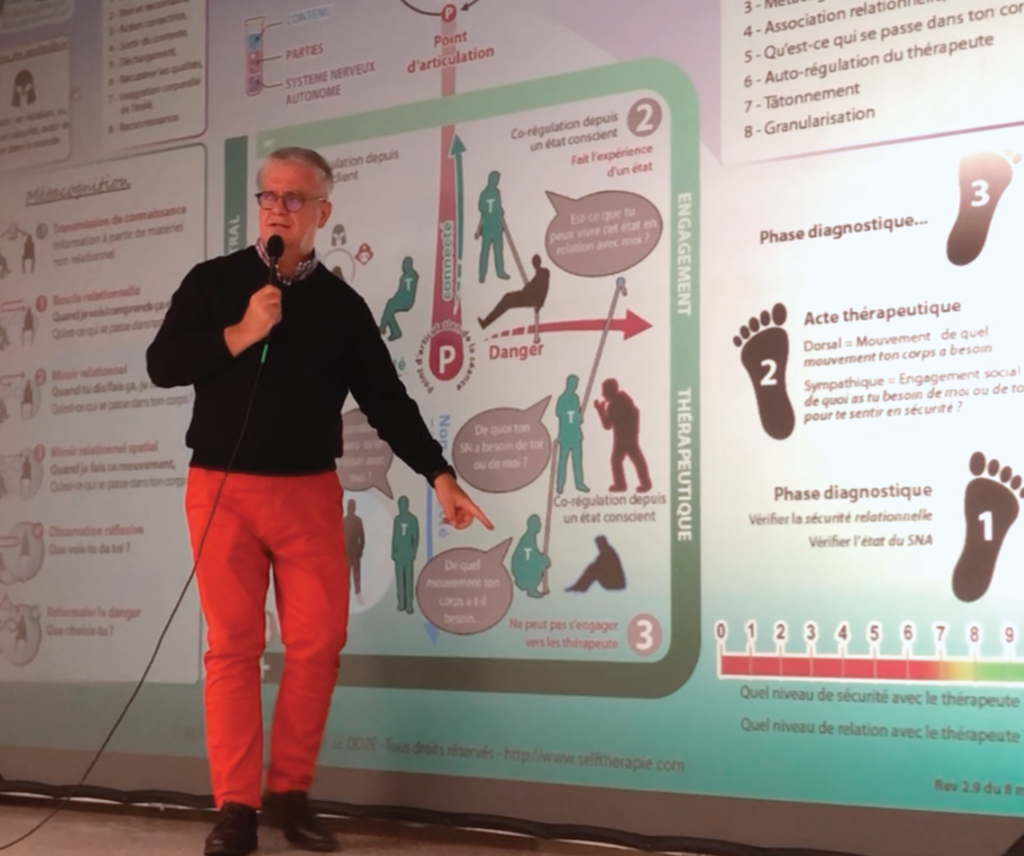 François Le Doze now works as a psychotherapist in private practice. He is the founder of Self Thérapie Formation®, an organization dedicated to teaching Relational Intelligence® to professionals in mental health, healthcare, and the helping professions.
Teaching holds an important place in his career. After helping to make IFS known in French-speaking Europe, he structured training in Relational Intelligence® so as to pass on not only concepts, but also a clinical stance and a methodology of intervention.
This educational dimension is essential. RI is not presented merely as a theory of trauma. It offers clinical guidelines for knowing when to support self-regulation, when to engage the bodily pathway, when to use metacognition, and how to adjust the therapeutic relationship when attachment disorders activate the patient’s protective responses.
A book presenting the model
With Relational Intelligence — For Conscious Therapeutic Engagement in the Service of Trauma Healing, François Le Doze presents a synthesis of this clinical and theoretical journey. The book sets out the origins of the model, its foundations, its neurobiological reference points, and its therapeutic implications.
The book offers a shift in perspective: trauma is understood not merely as a past event or a set of symptoms, but as a protective organization of the psychophysical system. This organization developed in order to survive insecurity, but it can remain active long after the danger has passed.
Relational Intelligence® seeks to address this organization by restoring the conditions of safety needed for it to transform. When safety with the therapist is sufficient, the patient can access self-regulation: their Self can enter into relationship with parts or dissociative organizations stuck in the past, allowing them to discharge and return to the present. When that safety is not yet sufficiently established, co-regulation comes first.
The model’s aim, then, is not formulated primarily as restoring Self-leadership, even though that may be one of its major effects. The clinical aim is emergence from traumatic dissociation: allowing what has remained organized around past threat to recover the present, relational safety, and an embodied presence.
Once this transformation is sufficiently established, RI can join IFS in its aim: the restoration of Self-leadership. But it adds an essential clarification. This Self-leadership is embodied: it is not limited to the Self’s inner relationship with the parts, but also concerns the person’s bodily presence, their relational safety, and their capacity to relate to others from the present.
A coherent clinical trajectory
François Le Doze’s journey thus follows a clear continuity: from neurology to psychotherapy, from IFS to Relational Intelligence®, from the study of the nervous system to the exploration of the relational conditions of regulation.
This trajectory explains the central place his model gives to the therapeutic relationship. It is conceived not as mere support, but as a condition of safety that makes emergence from traumatic dissociation possible. Conscious Therapeutic Engagement refers precisely to this stance: a way for the therapist to be engaged, regulated, and attuned, so that the patient can meet what has remained stuck in the past, release it, and return to the present.
Relational Intelligence® thus bears the imprint of a singular journey: that of a neurologist turned psychotherapist, who sought to bring together the rigor of neurobiology, the clinical understanding of trauma, and the transformative power of the therapeutic relationship.
Frequently asked questions
Who is François Le Doze?
A neurologist for some thirty years at Caen University Hospital, he became a psychotherapist after encountering Internal Family Systems, which he discovered first as a patient and then as a clinician. As an IFS trainer, he helped spread the model across French-speaking Europe before developing Relational Intelligence®. He is the founder of Self Thérapie Formation®.
Why did he develop Relational Intelligence®?
Over the course of his practice, he observed that some patients cannot always directly access the inner, self-to-self work that IFS offers — not for lack of willingness, but because safety with the therapist is not yet sufficiently established. This difficulty particularly concerns attachment disorders, in which the therapeutic relationship itself can activate protective responses.
What is the clinical aim of the RI model?
The aim is not formulated primarily as restoring Self-leadership, even though that may be one of its major effects. The clinical aim is emergence from traumatic dissociation: allowing what has remained organized around past threat to recover the present, relational safety, and an embodied presence.
What does his dual background as a neurologist and psychotherapist bring?
It allows Relational Intelligence® to avoid two forms of reductionism: explaining psychological suffering solely in terms of the brain, or speaking of inner life without taking the body and nervous system into account. RI, by contrast, seeks to connect these levels: the autonomic nervous system, the therapeutic relationship, dissociative organizations, metacognition, and the Self.
Also in this series
Going further
Does this resonate with you?
The book Relational Intelligence: For Conscious Therapeutic Engagement in the Service of Trauma Healing, by Dr. François Le Doze, presents the model in detail.
Looking for a simple resource to introduce these ideas to your patients?
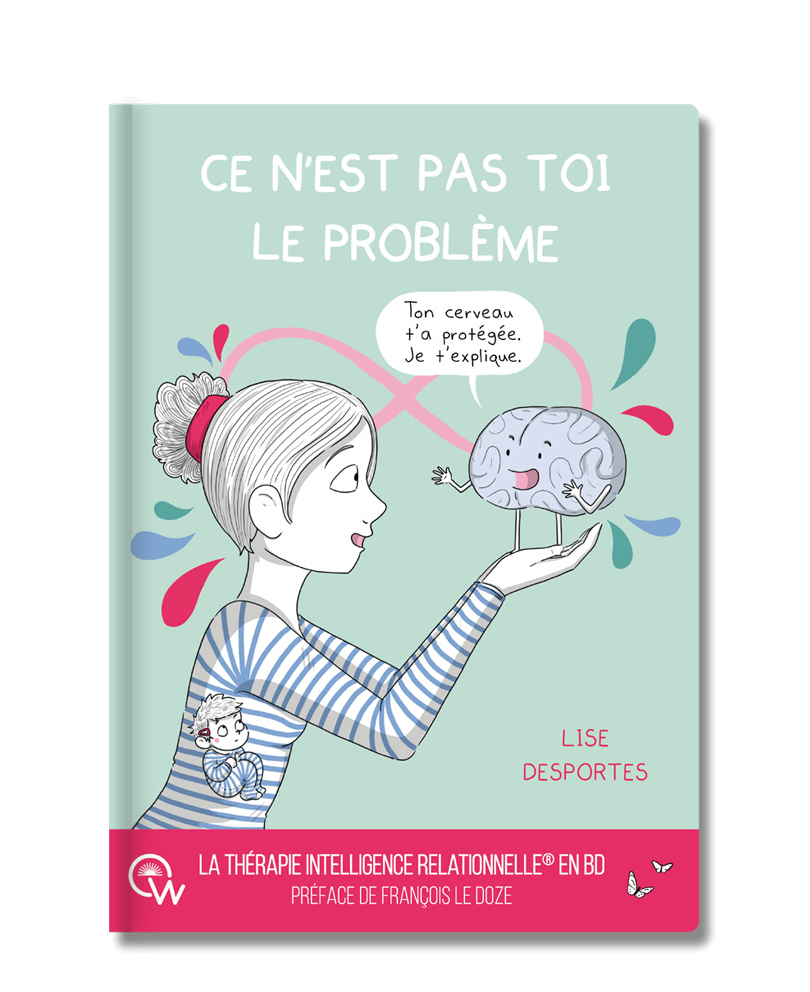
It’s Not You That’s the Problem, the graphic novel by Lise Desportes with a foreword by François Le Doze (released August 26), makes these concepts accessible.
Are you a practitioner who would like to train in Relational Intelligence®?
References
Schwartz, R. C. (1995). Internal Family Systems Therapy. Guilford Press.
Schwartz, R. C., & Sweezy, M. (2020). Internal Family Systems Therapy (2nd ed.). Guilford Press.
Dana, D. (2018). The Polyvagal Theory in Therapy: Engaging the Rhythm of Regulation. W. W. Norton.
Fay, D. (2021). Becoming Safely Embodied: A Guide to Organize Your Mind, Body and Heart to Feel Secure in the World. Morgan James Publishing.
 Français
 English